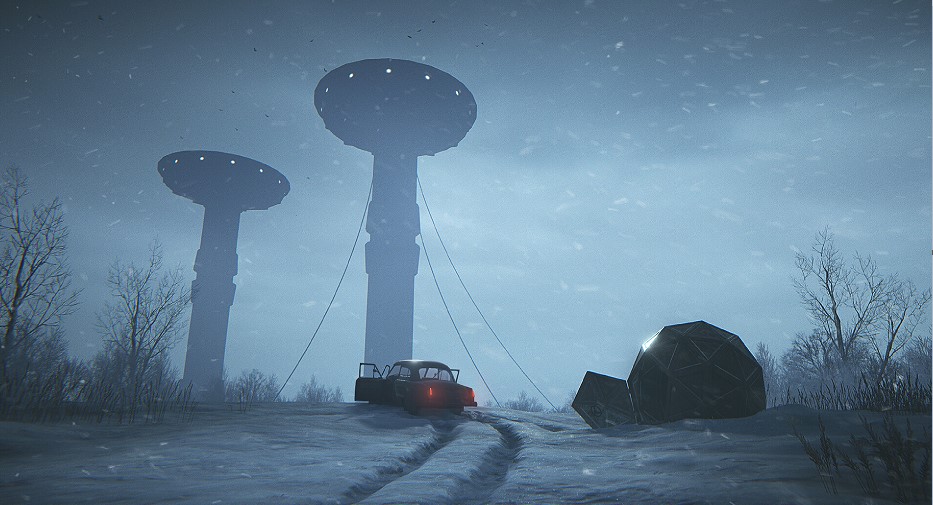
Domestic solo developer Sergey Noskov returns with a new intimate post-apocalyptic adventure, where cozy comfort coexists with homesickness and a touch of hopelessness. Like many projects created by a single author, the game balances between successful discoveries and natural limitations. But right from the start, it’s clear that it has enough imagination, attention to detail, and a distinctive signature to stand on its own two feet. Let’s explore the outcome of Hail to the Rainbow in our article.
The Country of Lost Cyberpunk
Hail to the Rainbow doesn’t waste the player’s time, immersing them right from the start in the everyday life of Ignat, a young boy forced to survive alone on the fringes of civilization in near-future Russia. The game doesn’t explain the world with lengthy monologues or cutscenes, but rather reveals it through the protagonist’s actions and the challenges they face.
The first steps take place in an abandoned space museum. Ignat comes here with the simple goal of obtaining a capacitor to power the de-energized devices. This isn’t a gameplay convention, but rather part of the game’s internal logic: in a world that once advanced technologically, before everything collapsed into oblivion, electricity is as valuable as food or warmth. The museum serves not only as part of the narrative but also as a testing ground, where the game rather brutally introduces how people interact with the world here.
Interactive objects barely stand out from the surroundings, the interface provides no overarching clues, and notes aren’t recorded in a separate journal. To find the exit, open the next door or safe, you have to carefully read notes, extract codes and clues from the text, pay attention to details, and spot visual markers in the interiors.
There are sections where you literally have to interact with objects to open the way: find keys, pull levers, restore power to de-energized panels, and activate mechanisms. The protagonist also has a drone, and in some episodes, the game encourages active use of its capabilities—not only for aerial reconnaissance, but also to drop a ladder, open a locked door, or reach a collectible photograph hidden off the main route.
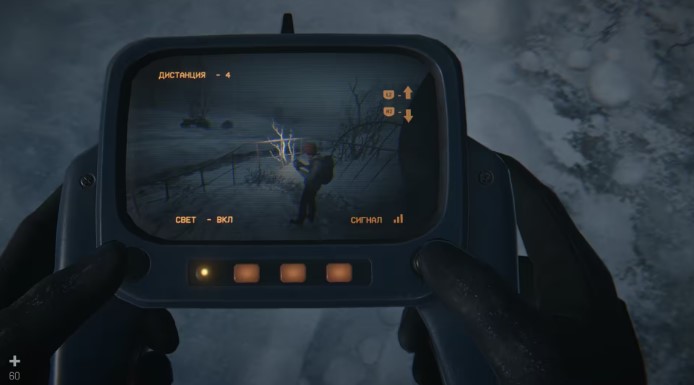
In addition, Noskov regularly uses small mini-games and technical actions. There’s hacking, where you have to isolate the correct fragments from a digital pattern within a limited time; there’s unscrewing bolts by rotating the stick; there’s assembling and repairing objects, where you have to drag parts into the right positions without any intrusive prompts. Sometimes these interactions seem excessive, but in the context of a project essentially created by a single person, their sheer variety and handcrafted execution inevitably surprise and continue to surprise throughout the game.
This approach works great for immersion, but it has a downside. Hail to the Rainbow makes few allowances for inattention. If you’re accustomed to bright markers on the minimap and a separate tab for active objectives, the museum will quickly make it clear that this won’t be the case here. It’s a fair, but harsh, move.
Sometimes the game goes overboard and turns searching for the right piece of paper or password into a chore, especially as the locations become larger and new tropes are added to familiar ones. However, in the right moments, this design truly rewards attentive players rather than dragging them out. In smaller spaces like the museum, the balance is perfectly balanced, and if you manage to escape without assistance, the rest of the game presents no particular challenges—the game doesn’t sprawl in scale, and most future locations remain linear, even when snowy wastelands spread out around you.
The Long Road Home
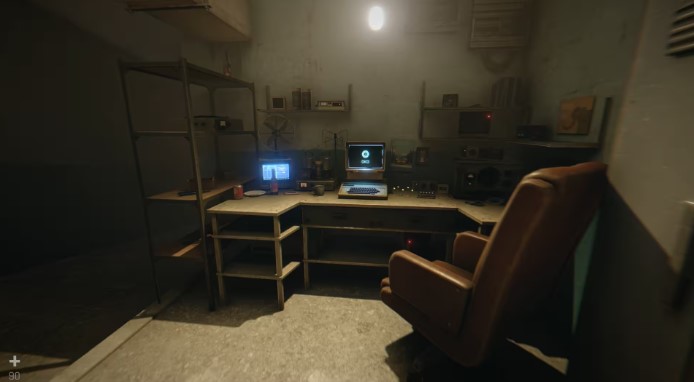
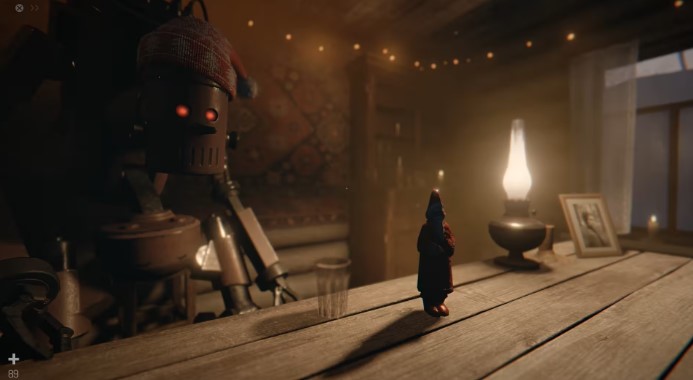
Having reached the shelter, Ignat finally gets a break. Here he can read messages from fellow survivors, play tic-tac-toe or a short side-scroller, and listen to Dmitry Blinov’s melancholy soundtrack. Frankly, if I had more tracks on my computer, I would have stayed here for a long time.
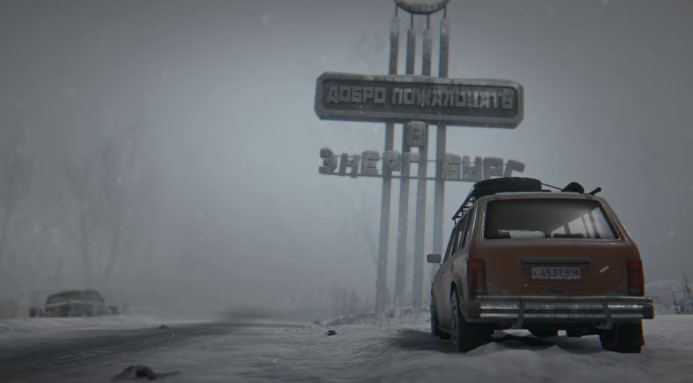
But Hail to the Rainbow isn’t an Extraction-style survival game about endless forays and returns to base. On an old computer, Ignat finds a letter that, judging by its contents, could only have been sent by one person—his father, whose fate has been unknown for many years. Having repaired his decrepit Niva and completed his preparations, Ignat sets out across the inhospitable Russian wilderness, where the aftermath of a long-ago catastrophe is felt at every turn.
The story that follows isn’t built on saving the world or a global threat—it’s already happened, and the world will never be the same. It’s Ignat’s personal journey, an attempt to reconnect with a past he thought long lost. For this story, Sergei Noskov creates a surprisingly plausible alternate reality—a variation on the theme of “what would have happened if a technological revolution had occurred in the Soviet Union.” Something like Atomic Heart, but closer to our reality, and therefore more accurate.
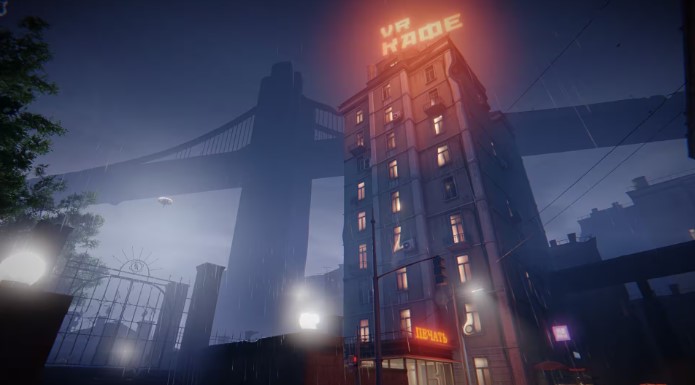
The abandoned villages, stations, laboratories, and peeling signs through which Ignat makes his way are replete with details that remind us that people once lived here, albeit sharing their space with machines. Each location is a puzzle in itself, a miniature story where at least something of a former life remains: fragments of notes, forgotten objects, and sometimes even functioning mechanisms that have outlived their creators.
The disturbing dreams and fragments of memories the player immerses themselves in when Ignat falls asleep only heighten the player’s interest and lift the veil of mystery. They not only reconstruct the disaster, explaining how Ignat manages to survive, where his engineering skills come from, and why he remains silent, but also deliver a powerful nostalgic uppercut. One such flashback depicts New Year’s Eve: Ignat wakes up and runs to the tree to open presents, while somewhere in the background, the familiar chant “Chip-cheep-cheep-cheep and Dale are hurrying to see you…”
And in that moment, the player doesn’t just see a child on the screen—they become that child themselves, and decades of years left behind flash before their eyes. At least, that’s how it was for me: that’s exactly what my New Year’s morning was like in the 2000s, and now it all seems like a dream. And this is the kind of memory of a lost past that only a project created by someone who grew up in those same realities can awaken.
Hail to the Rainbow is permeated with an atmosphere of loneliness, literally breathing absence—of hope, of support, of a future. Ignat is truly alone. Only hints suggest that others remain nearby: he brings a detector to the tower, leaves it, and takes the supplies left for him in return. But behind all this, there is no living presence—only an exchange of traces, as if the world continues to exist by inertia.
The only constant companion is the electronic voice embedded in the cybernetic eye. At first, it seems like an impersonal assistant, but over time, it reveals itself as an independent character with its own story and helps keep him from getting completely lost in this cold world. However, not all the machines here are friendly, and Ignat soon realizes that a wrench isn’t just a tool, but also a powerful argument in a dispute with robots.
Physiology of survival
The combat system is extremely utilitarian and doesn’t pretend to be a central mechanic. The primary weapon at the beginning of the game is a simple wrench. The impact of hits is weak, and enemy behavior is not always clear: some robots’ attacks are poorly telegraphed, so health depletes faster than the player can even figure out what exactly passed through the block. There are no dodges, so survival often comes down to carefully circling the enemy and raising a hand in defense.
And here’s where I’d like to chide the developer a bit. Although the game is formally positioned as an adventure with shooter elements, the shotgun appears later than expected, and towards the end, a submachine gun is added. However, firearms remain more of an occasional tool than a primary means of dispatching enemies.
Yes, shooting is more reliable and enjoyable, if only because you don’t have to guess the distance to your target, as with a wrench, but it’s still not without its nuances: ammo is limited, and hitting requires precision, as some enemies’ hitboxes are bizarre at best. In one tense sequence in the final third, I had to reload several times simply because, standing so close, I couldn’t hit a spiderbot.
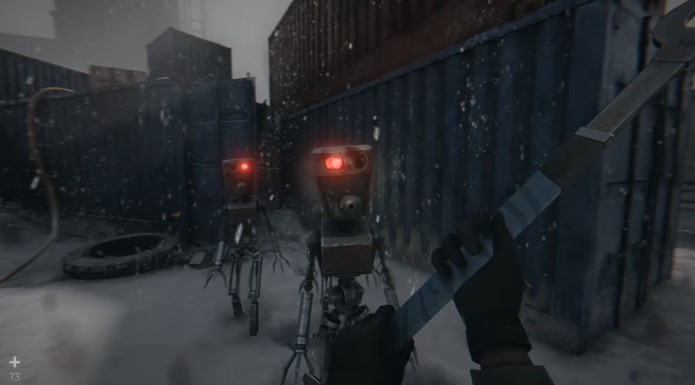
Nevertheless, on normal difficulty, there are more than enough resources for survival. At any given moment, I had a couple of medical injectors on hand, cans of condensed milk in case of hunger, a handful of reagents for crafting ammo or healing, and a few other things that might come in handy along the way. Not that any of this was absolutely necessary, but if you’re traveling through a post-apocalyptic world, you have to take things seriously.
The survival system, however, functions largely in name only. The game mentions cold, hunger, and radiation, but in reality, it all boils down to simple character maintenance. If you’re cold, eat. If you’re hungry, warm yourself by the fire. All these stats function identically, and there’s almost no real environmental influence. I never figured out whether the cold itself lowered my health: I’d notice the drop and simply replenish it any way I could.
There’s also a separate issue with resource management. For some reason, Ignat can only carry seven parts and seven chemicals, while crafting most useful items requires two parts and one reagent. As a result, chemicals are consistently overstocked and parts are understocked, resulting in insufficient inventory space for additional resources. Perhaps this balance will be further adjusted, just as the excessive battery drain when activating terminals and tablets has already been addressed.
Diversity at its limits
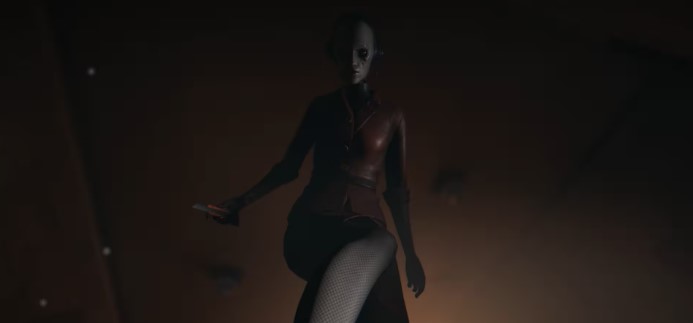
In addition to skirmishes with regular enemies, the game also features several boss battles. They aren’t particularly difficult and serve more as action scenes than as true tests of reaction and precision, but within the context of the game, they work remarkably well. One battle forces you to flee from a tireless, sadistic robot while trying to activate every switch in a labyrinth; another is a pleasant nod to the battle with the Twins in Atomic Heart; and the final one is reminiscent of the fight with Hedgehog from the Mundfish project, but with an unexpected humanistic twist.
There are also stealth segments—literally a couple of episodes. One takes place in Ignat’s old house, another in a dark forest, and another on a rooftop, where you have to distract the enemy with a drone, quickly switch controls, and dart from place to place. There’s no full-fledged stealth here, but that’s the beauty of Hail to the Rainbow: the game doesn’t artificially stretch itself.
It took me about thirteen hours to complete and view three of the four endings. A convenient chapter loading system from any autosave point allows for painless revisiting of desired forks. During this time, the game offers a remarkable variety of situations: car chases, hide-and-seek in the woods, shootouts, puzzles, exploration, and both standard and event-based battles.
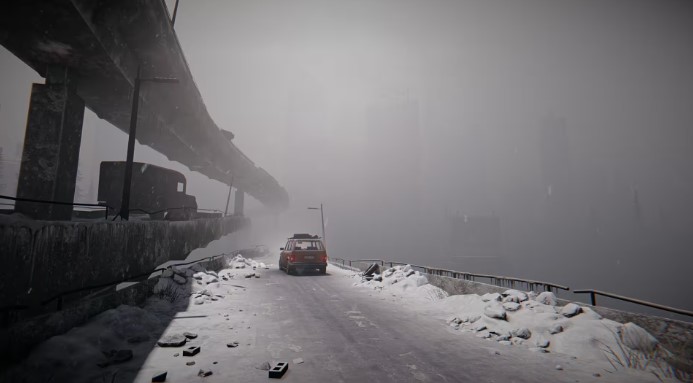
Even when moving between locations in a Niva, whose controls are simple but take some getting used to, the developer manages to challenge the player—for example, by forcing them to drive through a minefield, regularly exiting the car and risking explosions to navigate using the detector’s markers.
The sequence of these episodes is smooth, and Hail to the Rainbow offers little cause for fatigue: the pace changes at the right time, and repetition is minimal. All of this is accompanied by an engaging story, inventive cutscene direction, conversations about life, and Sergey Noskov’s meta-commentary, delivered through a “voice in my head.”
One of them occurs when Ignat is waiting for the elevator and hears that it would be nice if a crowd of enemies didn’t appear and need to be held back until the elevator arrives—a clear nod to a well-worn cliché. Another occurs when Ignat is crawling through narrow sewer pipes: “I’ve always been amazed at how easily characters in video games navigate post-apocalyptic ruins. Rebar, glass, broken pieces of concrete… you could get injured ,” he hears in his head.
Ringing modesty
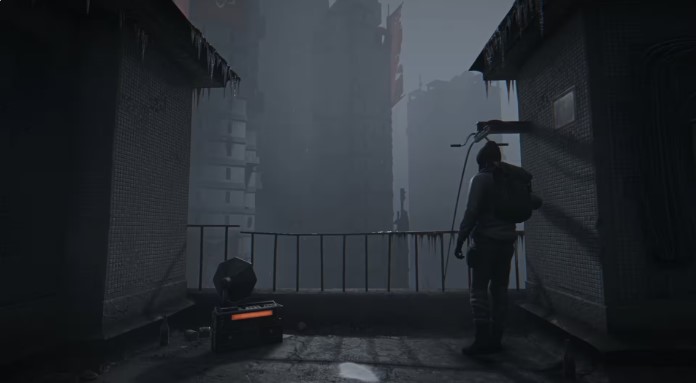
Like most solo indie projects, Hail to the Rainbow makes no attempt to hide its limitations. Visually, the game leans toward realism, but does so sparingly: subtle textures, honest lighting, and minimal effects. Meanwhile, the scenery, fog, and snowy fields enhance atmosphere and immersion, skillfully disguising the lack of fine detail—they’re asking for nothing more.
The lack of technological refinement is noticeable only in the facial animations: in some scenes, this is even justified by the plot, while in others, it’s perceived as part of the game’s visual language. All this only highlights Noskov’s ability to work within given constraints and transform limitations into a stylistic device.
Consequently, optimization is seamless. The game maintains a stable 144 frames per second on the RTX 4070 Super, with the graphics card only reaching half load during rare peak moments. Throughout the entire playthrough, I encountered no critical bugs or script crashes—further evidence of how meticulously the project was assembled and tested.
The sound deserves special mention. Thanks to the work of Dmitry Blinov and Nobody’s Nail Machine, the world not only sounds authentic but also maintains the melancholy atmosphere of a road trip that permeates the game and persists until the very end.
Otherwise, it would be strange to demand the technical level of a AAA blockbuster from an indie project, but Hail to the Rainbow fulfills its ambitions one hundred percent.
Diagnosis
Overall, Hail to the Rainbow feels like a cohesive and well-thought-out project, especially considering that the majority of the work was done by a single person. The world is compelling even with minimal resources, the gameplay is varied within its capabilities, and the sound and atmosphere maintain the right mood until the very end. While the combat remains utilitarian, the stealth is symbolic, and individual episodes suffer from a lack of linearity and minor rough edges, none of this undermines the overall design. For an indie game, it’s a fine example of how limited resources can be transformed into an expressive artistic language.
Hail to the Rainbow is a game crafted with both hands and heart, and that’s perhaps the most important thing to know. It’s small, a bit rough around the edges in places, but the author’s signature touch is evident in every frame. Some might think Sergey Noskov is repeating techniques from previous projects, but for me, this is my first encounter with his work, and it turned out to be incredibly captivating. Despite its limitations, the game feels confident and self-sufficient. It doesn’t pretend to be large-scale, but it does possess a sense of form and respect for the player. If you appreciate post-apocalyptic settings with a Russian soul and are comfortable with technical compromises juxtaposed with the author’s genuine love for his craft, I highly recommend it.