Can an animated series based on a D&D tabletop campaign engage viewers who’ve never heard of Critical Role? “The Mighty Nine” easily pulls it off, landing a critical hit on its very first attempt. The story begins with the familiar theft of a magical artifact, but thanks to a cast of vibrant and wildly different characters, it quickly evolves into a chaotic fantasy adventure that’s hard to put down.
From a party of friends to a media empire
Let me start with a little context. Critical Role is a unique phenomenon born from the simple desire of a group of friends who work as voice actors to play Dungeons & Dragons for fun. You’ve almost certainly heard their voices in countless games and animation projects. Matthew Mercer as the Dungeon Master, Laura Bailey, Travis Willingham, Liam O’Brien, Sam Riegel, and the rest have been gathering around a table, off-camera, and just having a good time since 2012.
Three years later, Felicia Day of Geek & Sundry suggested Mercer start a stream of their game on Twitch—and opened a kind of inverted Pandora’s Box, from which, instead of disaster, creative chaos with a positive sign burst forth.
Actors accustomed to bringing characters to life in video games and animation transferred their skills to tabletop roleplaying. They didn’t just act—they lived every roll of the dice. From session to session, Critical Role grew into a cultural phenomenon, growing an audience of millions, fan art, and other content created by fans based on the campaigns.
Over time, this environment has grown into a full-fledged media empire with comics, novels, and animated adaptations—starting with The Legend of Vox Machina, a film adaptation of the show’s first campaign, which arose from record crowdfunding and was subsequently picked up by Amazon.
While the adaptation of the first campaign continues and is preparing for its fourth season, a parallel adaptation of the second, The Mighty Nein, has been launched. Its events unfold in the same Exandria universe created by Matthew Mercer, but two decades later, on a different continent, and with entirely new characters. We’ll discuss it today.
Zero session
The series takes place in Wildermount, one of the continents of Exandria, where two nations have long been at odds with each other. On one side is the militaristic Dwendal Empire, on the other the Krin Dynasty, founded by the dark elves known as the drow. Their rivalry becomes the backdrop for the story, although the series initially hesitates to make it the driving force behind the plot.
After a daring heist and the theft of a powerful magical relic from the Krin Dynasty, which will eventually become the central plot point, “The Mighty Nine” unexpectedly slows down. Instead of immediately diving into the party-based adventure, the series methodically introduces the viewer to the disparate heroes of the future team.
This choice can be confusing at first. One episode passes, then another, and the characters still haven’t formed a cohesive team. Yet the show is action-packed: there are swords, magic, strong language, and jokes that are both below and below the belt. The characters quickly captivate you with their ambiguity, yet the pace of the narrative remains deliberately leisurely.
It gradually becomes clear that this rhythm was chosen deliberately. The creators stretch out the moment the team assembles, allowing the viewer to get to know each character individually. Thanks to this, the future unification of strangers, who will later call themselves the “Mighty Nine,” seems like a logical coincidence.
Note: In this text, I use the official Russian name “Mighty Nine” when referring to the series. “Mighty Nine” is written when referring to the team. “Nein” refers to the speech pattern of one of the characters, and “nine” originated as an inside joke in the original campaign due to the number nine regularly appearing on the dice.
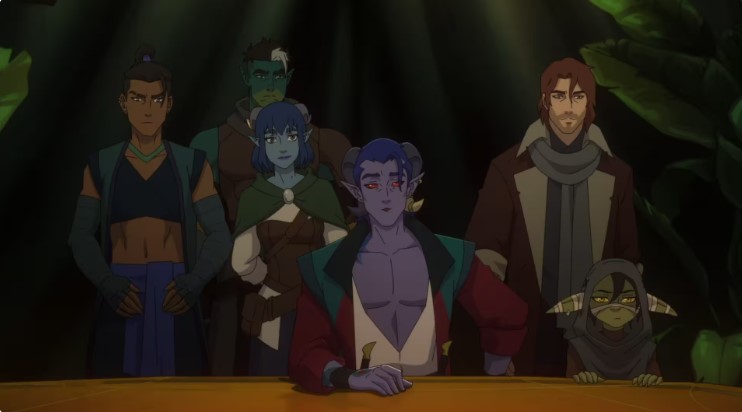
In classic Dungeons & Dragons terms, the first season is a kind of “session zero,” a lengthy introduction before the real campaign. This is a risky move for a commercial show, as it needs to grab the viewer by the throat from the very first minute, otherwise they’ll simply leave. However, in the context of a project initially designed for multiple seasons, this approach pays off.
Especially compared to “The Legend of Vox Machina,” where the entire party is assembled and battling a dragon in the very first episode, which ultimately impacts the depth of character development. “The Mighty Nine” takes a different approach. It draws you in gradually, allowing its characters to breathe, and the writers to build up all the internal and external conflicts and hang out the Chekhov’s guns that will later turn into napalm.
From this perspective, the first season works like a well-written prologue. Yes, as a standalone work, it leaves a sense of ambiguity, but that’s to be expected. The original story stretched across more than 140 episodes, each three to four hours long, so the writers have more than enough material.
Only in the fourth of eight episodes does the long-awaited unification of the disparate characters into a single group occur—and the show is noticeably transformed. The party chaos that so many love about tabletop role-playing games appears, where the unpredictability of personalities collides with successful and unsuccessful decisions, and events unfold not according to plan, but flow from the characters’ lively reactions.
After all, as in any party-based RPG, the key role here is not so much the plot itself as the dynamic between the characters. It’s this dynamic that holds attention and drives the narrative forward, gradually transforming a collection of separate plot lines into a coherent story.
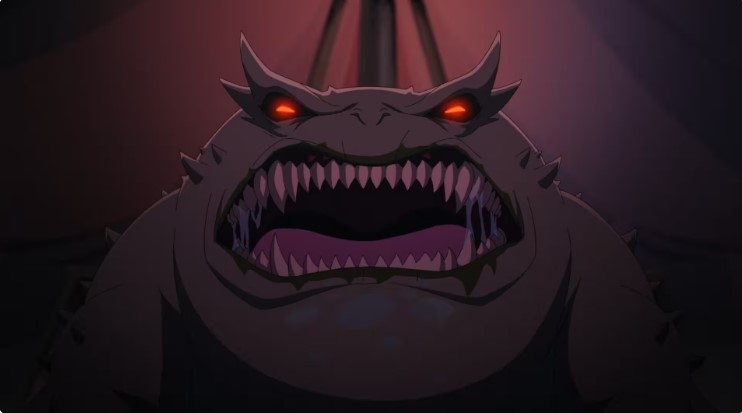
Seven outcasts in search of themselves and each other
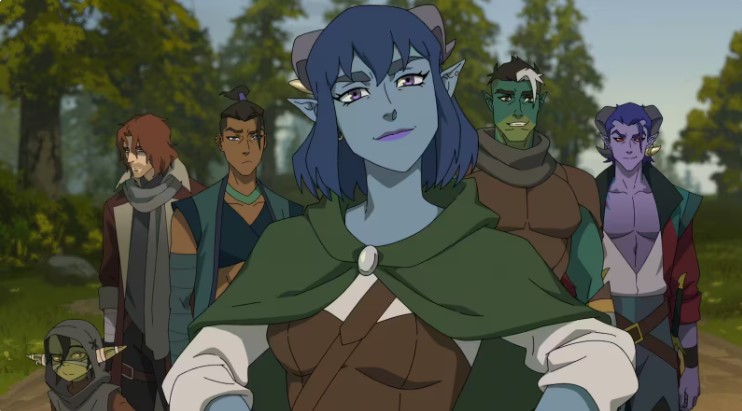
At the beginning of their journey, the Mighty Nine’s company is a scattered group of outcasts, true “rip and throw away,” each with their own demons. They meet us, if not at the bottom of life, then somewhere very close to it. So who are they? Let’s get acquainted.
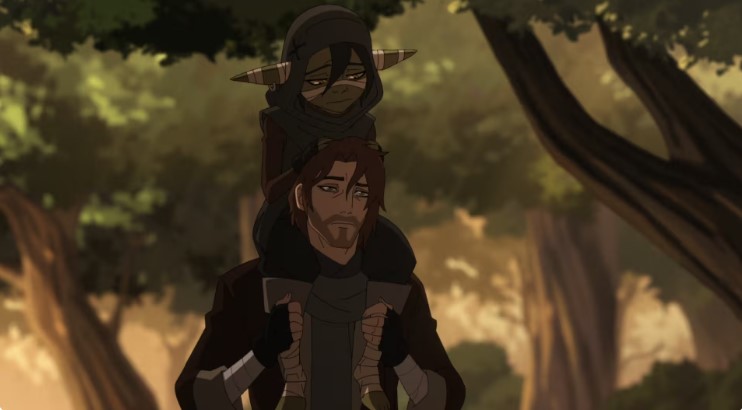
The first person they meet is Caleb Widogast (Liam O’Brien), a wandering wizard with a troubled past who is trying to regain his lost magic and meaning in life, as well as take revenge on the one responsible for the death of his parents.
Caleb becomes the story’s emotional center, and his closest ally is Nott the Brave, played by Sam Riegel, a goblin bandit with an unhealthy love of alcohol and dark humor. On the surface, she’s a comical character, but underneath, she’s a deeply tragic figure hiding behind a jester’s mask. The audience first encounters her duet with Caleb, and it sets the tone for the entire show, which teeters on the edge of comedy and tragedy.
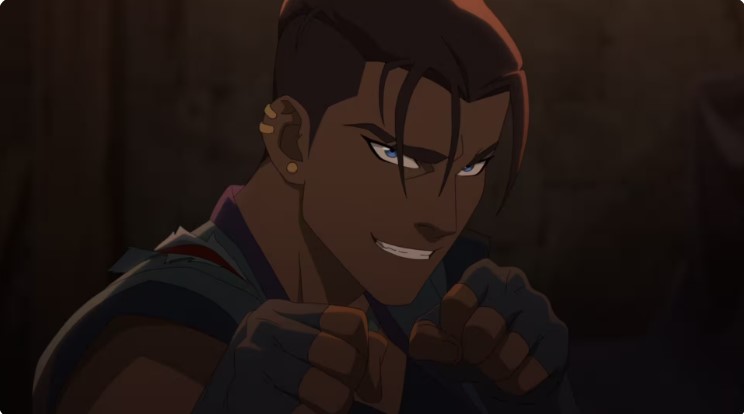
Then there’s Beauregard Lyonette, or simply Bo (Marisha Ray), a human nun from the Cobalt Soul Order. A champion of justice and a fiery temperament, Bo prefers to strike first and ask questions later, which, to put it mildly, doesn’t work in her favor. Bo is desperately trying to prove her worth without regard for her wealthy parents and to complete her investigation.
At times, she even takes on the role of the voice of reason, but her straightforwardness and mistrust often prevail, making her character easily irritating. However, over time, the development of her interactions with the rest of the party, especially with Caleb, more than makes up for any quirks.
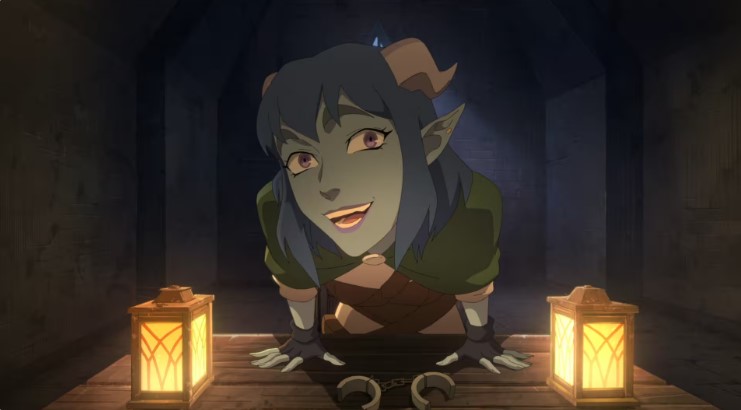
In stark contrast is Jester Lavorre (Laura Bailey), a tiefling priestess who brings a chaotic good energy to the story. She chatters nonstop, loves pranks and foolishness, and her antics regularly lead to problems for herself and those around her. Behind the image of a wide-eyed, naive child, lies loneliness and a painful need to be needed. It’s no coincidence that Jester has a mysterious “imaginary friend”—the Wanderer—whose nature becomes one of the most intriguing hooks.
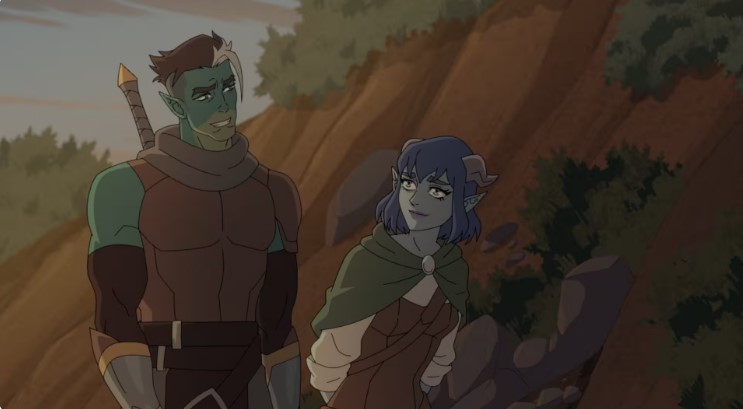
Fjord Stone (Travis Willingham) initially seems like the most familiar archetype in the group. A half-orc with a murky past and reserved personality, he easily reads as just another “good guy,” but this facade proves deceptive. Fjord is running as much from external threats as from himself, and his arc gradually unfolds through doubts, fears, and hidden motives that surface as the story unfolds.
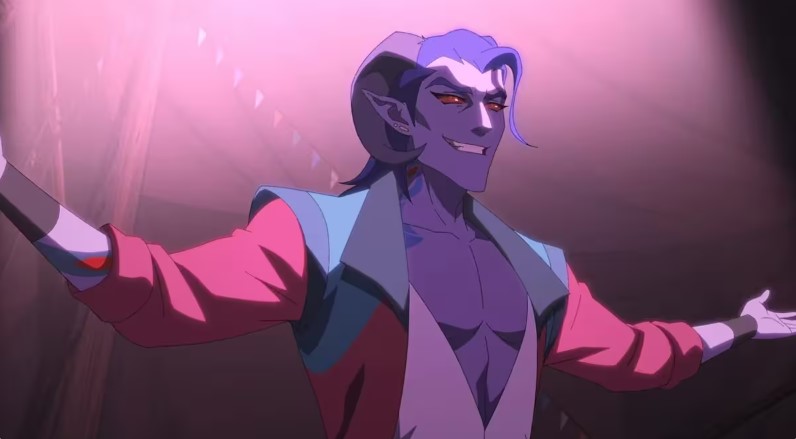
Mollymock “Molly” Tileef (Taliesin Jaffe) is an eccentric tiefling performer in a traveling circus and part-time bloodhunter. He lives his life as if every scene is part of a performance. His theatrical mannerisms conceal many secrets and serious internal conflicts, but the first season only hints at this layer, deliberately leaving further character development for the next.
Finally, Yasha Naydorin, a barbarian played by Ashley Johnson, appears in fragments, wielding a massive sword, leaving behind piles of bodies and even more questions, and is not yet a fully-fledged party member. The reason is simple: Ashley Johnson’s participation in the original campaign was sporadic, leaving her character wandering off-screen most of the time. This is perhaps the most noticeable miscalculation of the season, but even without Yasha, the writers managed to fill the first season with enough group-building events.
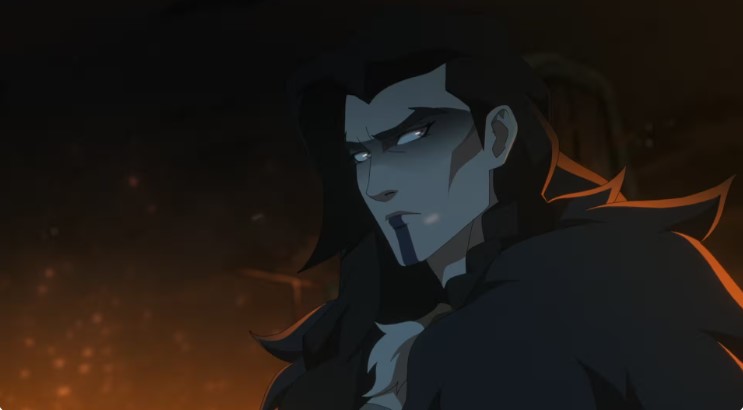
By the season finale, the party not only comes together, but the chemistry between the characters emerges, the very reason for the long prologue. This diverse group of characters gradually transforms into something resembling a family, albeit a rather dysfunctional one, which only fuels interest in the adventures that follow.
From heroic farce to fantasy tragicomedy
I’m only familiar with the original campaign at a general level, so I can’t fully assess the scale of the changes the authors made during the adaptation. But even without this knowledge, I’m struck by how precisely the characters’ local stories work together as a system. Each personal drama, each trauma, and each motive initially seems to exist separately, but gradually they begin to reflect on one another, heightening the overall tension.
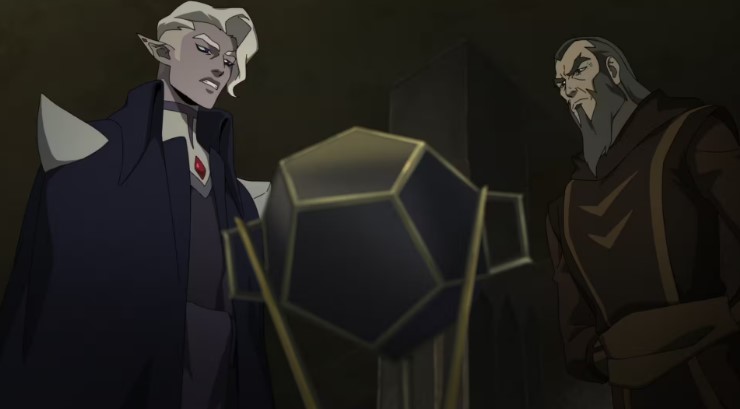
This construct features both direct and indirect antagonists. Trent Ikiton, a figure closely tied to Caleb’s past, is the bearer of an ideology that justifies war, murder, and repression as a desire for peace, but in reality conceals a thirst for power, a fear of losing control, and a willingness to use people as expendable resources. While this portrayal may not be particularly original, it’s a case where one can easily overlook this motivation, as the show’s format makes the characters’ reactions to them more interesting than the antagonists themselves.
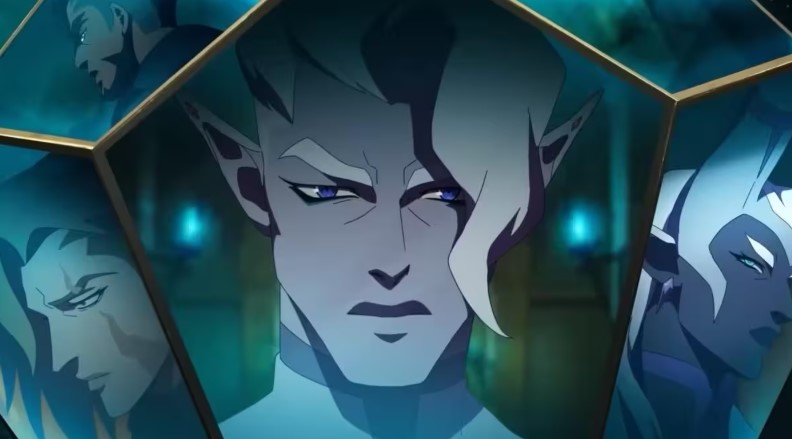
Essek Tailiss, voiced by Matthew Mercer himself, is far more compelling. He’s a far more complex character, forced to repeatedly pay a high price for well-intentioned decisions—a characteristic that fits seamlessly with the show’s murky morality.
The morality here truly becomes gray. “The Mighty Nine” is taken noticeably more seriously than “Vox Machina.” There’s less crude farce and demonstrative hilarity, and the humor increasingly emerges as a response to fear, tension, or awkwardness. The series allows itself to slow down and carefully explores themes of trauma, guilt, and self-discovery, without descending into dreary moralizing and never forgetting that this is, first and foremost, an “Adventure”—with a capital A.
This is largely due to the fact that by the second campaign, Critical Role’s participants had become noticeably more experienced as storytellers and players. The characters are more complex, the imagery is more nuanced, and the interactions are richer—which gave the animated adaptation a more solid dramatic foundation.
Meanwhile, the global plot simmers slowly in the background. The confrontation between the Dwendal Empire and the Krin Dynasty, the war for the Lighthouse, and the political intrigues are sketched out. The series reveals just enough for a newcomer: one kingdom dislikes the other, everyone wants a magical artifact, and a major war looms on the horizon. For those familiar with the source material, a wealth of details remains behind the scenes, but even without them, the story flows smoothly.
No critical failures
Visually, “The Mighty Nine” continues the Vox Machina tradition. The art style and character designs are easily recognizable, without any drastic experiments or attempts to invent anything fundamentally new. Titmouse Studio delivers a confident, neat image with clear lines, expressive color, and easy-to-read action.
The season is packed with action scenes: from street brawls and backstreet duels to spectacular circus performances and magical chaos that engulfs everything around. Even the leisurely gathering of the party and introduction to the characters is accompanied by a series of combat encounters of varying inventiveness, and their scale naturally grows as the team expands.
Of course, we’re not talking about truly high-budget animation. There are some obvious cost-cutting moments—in more static backgrounds or the restrained animation of certain scenes—but overall, the visual standard is confidently maintained. The series is particularly at home in dialogue and close-ups: the characters’ facial expressions and emotions are clear even in minimalist settings, allowing dramatic scenes to function without unnecessary artifice.
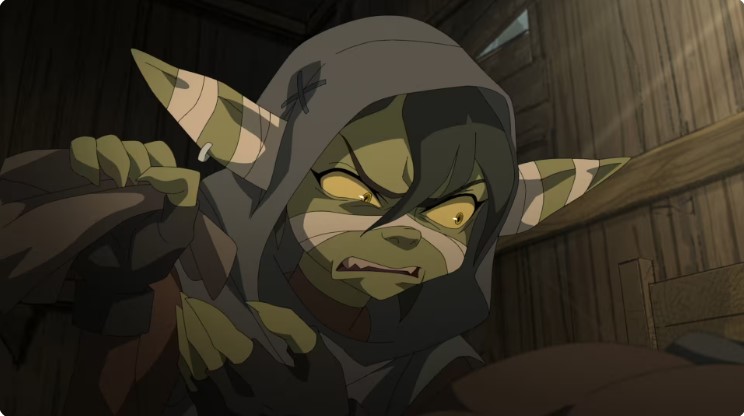
The use of 3D elements is subtle and almost unnoticeable—much less garish than in later seasons of Vox Machina, where scale models of imaginary dragons sometimes blatantly jut out from the 2D backdrop. However, there were simply no truly major battles in the first season of “The Mighty Nine,” so it’s too early to draw any definitive conclusions.
The voice acting deserves special mention. There was no doubt about it: the entire core cast returned to their roles, and prominent guests like Lucy Liu and Alan Cumming were brought in to play supporting characters. This is one of those cases where the series is truly best watched in the original language with subtitles—the actors don’t just voice the characters, they add their voices to the characters they created.
Diagnosis
“The Mighty Nine” is a heady fantasy adventure about humans and non-humans who don’t intend to save the world or become heroes. They’re simply unlucky enough to be in the wrong place at the wrong time. The series makes heavy use of fantasy tropes, but the chaotic party dynamics make them lively and unpredictable. There’s plenty of action, from street skirmishes to large-scale magical battles on multiple fronts.
The humor is sometimes crude and not always appropriate, but more often than not, it works to enhance the characters and interactions within the party. The dialogue is natural, the characters regularly make mistakes, and the plot readily takes unexpected turns.
“The Mighty Nine” is recommended for those tired of sterile and predictable fantasy. It’s important to note, however, that the first season ends with a comma. The story breaks off just when the party is gaining internal cohesion and the conflict is finally gaining momentum. This leaves a feeling of incompleteness—and works against the season as a standalone work.
This approach is easy to explain. A significant portion of the season is spent introducing the characters, and in this case, it’s justified. However, viewers new to Critical Role and not planning to dive into the original campaign might be better off waiting for the second season. The first season alone won’t be enough—you’ll definitely want more!—and not everyone has the 500-600 hours to watch the original.
I approached this season as a casual viewer, but “The Mighty Nine” confidently passed the charisma and persuasiveness test, recruiting another fan to the Critical Role ranks. It’s definitely a critical success!